Mule Dung Managament
Managing mule dung is a critical environmental priority during the Shri Amarnath Ji Yatra. With thousands of ponies and mules facilitating transportation across this fragile high-altitude region, we have implemented a strict, systematic approach to protect the ecology. Building on the success of our past waste-processing initiatives, our active 2026 management process is detailed below:
1. Active Collection Along Routes and Camps
- Dedicated Sanitation Teams: We deploy a dedicated, highly trained workforce of sanitation personnel tasked specifically with maintaining spotless tracks and camp areas, including the immediate removal of mule dung.
- Continuous Sweeping: Yatra routes and resting points undergo continuous, scheduled sweeping to entirely prevent dung accumulation, eliminating foul odors and safeguarding against water contamination.
- Strategic Collection Points: We utilize specifically demarcated collection zones along the trek and within the camps for rapid aggregation.
2. Scientific Disposal and Treatment
- Deep Composting Pits: We excavate deep composting pits at scientifically vetted locations, strictly isolated from water bodies and pilgrim pathways. All organic mule dung is deposited directly into these pits.
- Bio-Enzyme De-odorizing: To accelerate decomposition and neutralize odors, we actively treat the pits with specialized bio-enzymes before sealing them with soil and stones, fully preventing pathogen spread.
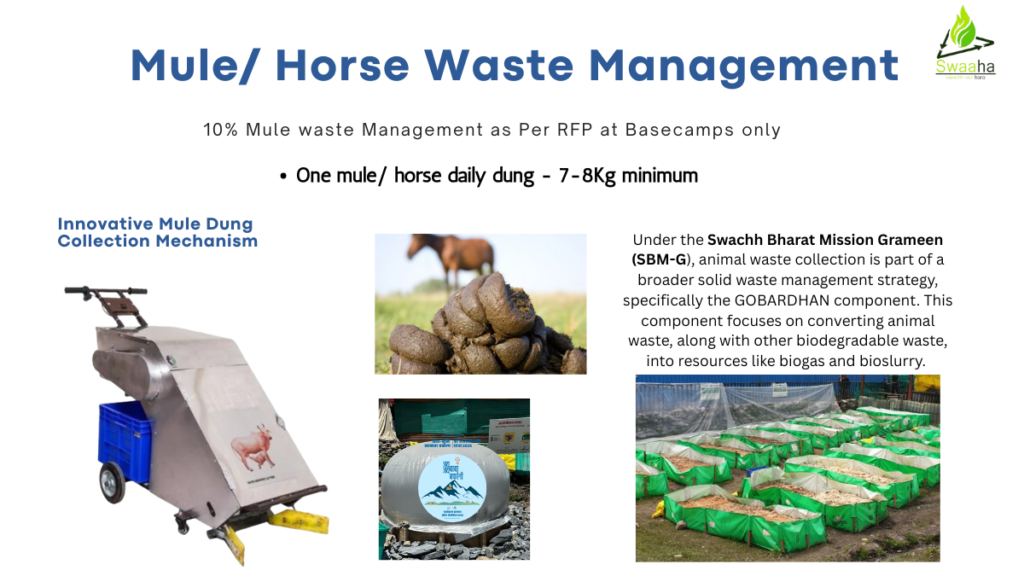
- Biogas Generation: At our base camps, we actively process collected dung through specialized bio-digesters. This circular economy initiative successfully converts raw waste into usable biogas for heating, leaving behind nutrient-rich slurry used as fertilizer.
- Downhill Transport: In steep terrains where on-site composting is not viable, collected dung is physically transported to our designated lower-altitude composting facilities for safe processing.
3. Absolute Water Source Protection
- Strategic Distancing: Every collection and disposal site is strictly mapped to ensure maximum distance from natural streams and rivers, guaranteeing zero contamination of community water sources.
- Drainage Control: We engineer secure drainage boundaries around all stable areas and collection points to completely prevent dung runoff from entering water bodies during heavy rains.
4. Strict Enforcement and Regulation
- Mandatory Registration: Every registered pony owner receives comprehensive operational guidelines mandating strict adherence to our waste management protocols.
- Active Supervision: Our supervisory staff patrols the routes to enforce compliance. Pony handlers must dispose of dung exclusively at designated locations, with severe penalties enforced for any non-compliance.
- Continuous Sensitization: We conduct mandatory training sessions for handlers, ensuring they fully understand the ecological fragility of the Himalayas and their crucial role in the 'Swachh Yatra'.
5. Real-Time Monitoring
-
- Daily Inspections: Nodal officers and sanitation heads conduct rigorous daily inspections across all routes and camps to verify the absolute effectiveness of our dung management operations.
- Rapid Response: A real-time feedback system allows immediate reporting of any sanitation issues, ensuring our response teams can address and resolve any accumulation immediately.